Garmin inReach Mini 2 Review
A deep-dive review of the Garmin inReach Mini 2 satellite communicator — covering SOS performance, battery life, messaging, subscription costs, and who should carry one.
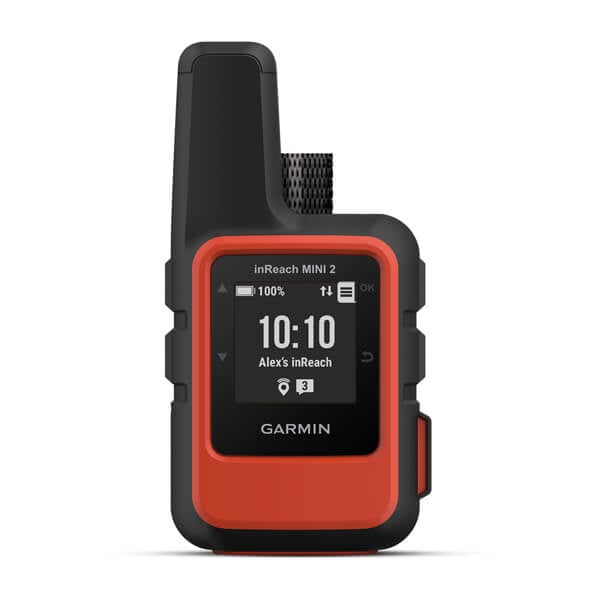
Overview
The Garmin inReach Mini 2 is a two-way satellite communicator built around a single, non-negotiable premise: getting a message out — or getting help — when there’s no cell signal for miles. At 100 grams (3.5 oz) and roughly the footprint of a matchbox, it’s the lightest, most compact device in its class that still offers true global two-way messaging, interactive SOS, GPS navigation, and weather forecasting. It’s aimed squarely at backpackers, thru-hikers, and anyone who travels deep enough into the backcountry that “no service” is less an inconvenience and more a daily reality.
Key Specs
| Spec | Detail |
|---|---|
| Weight | 100 g (3.5 oz) |
| Dimensions | 2.04” × 3.90” × 1.03” (5.2 × 9.9 × 2.6 cm) |
| Display | 0.9” × 0.9”, 176 × 176 px, monochrome transflective MIP |
| Battery Life | Up to 14 days (10-min tracking) / Up to 30 days (30-min tracking) |
| Battery Type | Rechargeable internal lithium-ion |
| Waterproofing | IPX7 |
| Impact Rating | MIL-STD-810 |
| Satellite Network | Iridium (global) |
| GPS | Yes |
| Interface | USB-C |
| Retail Price | ~$400 |
| Subscription | Required; starts ~$8/month (Enabled), plans up to ~$50/month (Premium) |
Need to organize your gear?
Packstack is the free app that helps backpackers build a gear database, create detailed packing lists, and share their setup with friends.
Create Free AccountPerformance
SOS & Emergency Communication
This is the core reason most people clip one of these to their shoulder strap, and the Mini 2 handles it well. When you hit the SOS button, a team specializing in backcountry emergencies is standing by 24/7 to help. Garmin coordinates with the appropriate search and rescue teams around the globe, passing along your information and location. Critically, once you press the SOS button located under a protective cap, you can also communicate by text with search and rescue personnel — so you can relay your injury, your party size, and whether you can self-evacuate, rather than just firing off a flare into the void.
In a real documented test, in a real-life situation where a hiking partner required evacuation, the SOS button was easy to access, and the device requires you to confirm your SOS activation, preventing accidental presses.
Messaging
Messages go out via Iridium’s Short Burst Data (SBD) system. It’s reliable — but it’s not particularly fast. Under clear skies, most messages go through in 1 to 3 minutes. In tree cover, deep canyons, or stormy weather, it can take longer.
That’s a meaningful caveat for anyone hiking in the Northeast or Pacific Northwest, where canopy cover is persistent.
On-device typing is a slog — you’re scrolling through a character list with side buttons. The practical workaround everyone uses: pair the Mini 2 with the free Garmin Messenger app on your smartphone to type messages, view conversation threads, adjust settings, and automatically switch between Wi-Fi, cellular, and satellite when you’re in range. Once you lean on the phone for composition, the experience is close to normal texting — just with latency. Worth noting: while some plan tiers mention voice and photo messaging perks, this is for users of the inReach Messenger Plus and does not apply to the Mini 2, which does not support voice or photo messaging.
Battery Life
The battery story here is genuinely good, with an important asterisk. Compared to its predecessor, the Mini 2 lasts significantly longer between charges, reportedly up to three times the battery life. In conservative real-world thru-hiking use, keeping the device on for three to five hours per day to send messages, occasional tracking points, and daily weather forecasts, the device never needed an extra charge between resupplies — surviving six days of medium usage with plenty of battery to spare.
The asterisk: take Garmin’s battery life estimates with a grain of salt, depending on your location — they were benchmarked in optimal operating conditions. In heavily forested terrain like the White Mountain National Forest, you can get 20 hours of 10-minute tracking — a far cry from the 4 days Garmin estimates in moderate tree cover. If you’re doing 10-minute tracking in dense woods, plan accordingly and carry a small power bank.
Durability & Build
After three years of use including falls off motorcycles, being thrown in mud puddles, snow banks, and rivers, and all manner of spills while climbing mountains, it looks nearly brand new.
The IPX7 waterproofing and MIL-STD-810 rating aren’t marketing fluff — multiple long-term users corroborate that this thing simply doesn’t break. USB-C charging means one less cable in your kit.
Navigation
The Mini 2 isn’t a replacement for a proper mapping app — the screen is small, the map is breadcrumb-only, and Gaia or CalTopo will run circles around it for route planning. What it does offer is useful: TracBack routing helps users return to their starting point, a new feature added with the Mini 2. Think of the navigation as a safety net, not a primary tool. You can also control the Mini 2 from a compatible Garmin watch, making it easy to send quick messages or check incoming ones without pulling the device off your pack.
Subscription Costs
This is where you need to pay attention. The Mini 2 requires an active satellite subscription plan to unlock its full features, including messaging, tracking, and weather updates. Garmin offers three main plan tiers — Essential, Standard, and Premium — each catering to different user needs. As of September 2024, Garmin simplified its service plans — all consumer plans are now month-to-month with no annual contract option and require a $39.99 activation fee. There’s also an $8/month “Enabled” tier that keeps SOS active while you pay per message — useful for minimalists who just want a panic button. Long-time Garmin subscribers who previously used suspend-and-reactivate strategies have grumbled, particularly annual subscription holders on base and mid plans. If you’re a seasonal user who previously used the old Freedom plan, run the numbers before assuming the new structure works in your favor.
Pros & Cons
Pros
- Best size-to-capability ratio in the satellite communicator category at 100g
- True global coverage via Iridium — no dead zones if you can see sky
- Interactive two-way SOS with 24/7 staffed response center
- Exceptional ruggedness (IPX7, MIL-STD-810) backed by years of real-world abuse testing
- USB-C charging; compatible with any standard power bank
- Garmin Messenger app makes phone-paired messaging genuinely convenient
- Compatible with Garmin watches for wrist-based control
- TracBack navigation adds a useful safety feature
- Weather forecasts for any waypoint along your route, not just current location
Cons
- On-device typing is painful — a phone pairing is practically mandatory for comfortable messaging
- Small 0.9” screen limits readability, especially for longer messages
- Battery life degrades significantly in heavy tree cover vs. rated specs
- Ongoing subscription cost; the 2024 plan restructure hurt seasonal users
- ~$400 hardware price plus mandatory subscription = high total cost of ownership
- Text-only; no voice or photo messaging (the inReach Messenger Plus handles those)
- Message latency (1–3 min+) requires a mindset shift from instant text culture
- Some experienced users (notably Andrew Skurka) have found rival messengers like Zoleo offer a smoother messaging experience on the device itself
Who Should Buy This
The Mini 2 is the right choice for weight-conscious backpackers, thru-hikers, and backcountry travelers who want a dedicated, purpose-built safety device they’ll actually carry. It earns recognition as the smallest, lightest, toughest two-way satellite communicator available — traits that have made it one of the most popular satellite communication, GPS, and SOS devices among weight-conscious backpackers and hikers. If you’re already deep in the Garmin ecosystem with a compatible watch, the integration value is real. If you’re a casual, once-or-twice-a-year user who previously relied on the old suspend-and-reactivate subscription model, the math is less favorable now — run a cost comparison with the inReach Messenger ($100 cheaper) or a simpler PLB before committing.
Verdict
The inReach Mini 2 remains the gold standard for ultralight satellite communicators. Nothing else in the category packs this much capability — true global two-way messaging, interactive SOS, GPS, weather, and rugged construction — into a 100-gram package. The ongoing subscription cost and the 2024 pricing restructure are real friction points that deserve honest scrutiny, and the on-device typing experience is genuinely poor without a paired phone. But for what it does when it matters most — getting a rescue coordinated from somewhere well beyond cell service — it’s hard to argue with. Rating: 8.5/10.