Big Agnes Copper Spur HV UL2 Review
A deep-dive review of the Big Agnes Copper Spur HV UL2 — a top freestanding backpacking tent balancing ultralight weight with standout livability for thru-hikers and weekend warriors.
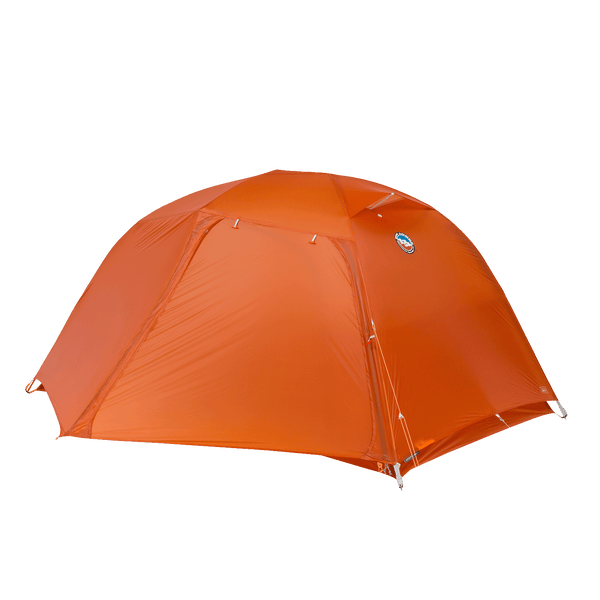
Overview
First introduced in 2008, the Copper Spur series by Big Agnes has been a consistent frontrunner in the ultralight tent category.
The HV UL2 is the two-person flagship of that line — a fully freestanding, double-wall tent built around a high-volume pole geometry that punches well above its weight in livability.
If you’re looking for a tent that offers low weight without sacrificing livability or comfort, the Copper Spur UL2 is a slam dunk — folks looking for a backcountry tent that’s easy to set up, durable for regular use, and versatile enough to handle three-season weather conditions will fall in love with its practical features.
The catch, as always, is the price and the delicacy of the materials.
Key Specs
| Spec | Value |
|---|---|
| Packaged Weight | 1417 g (3 lbs 2 oz) |
| Capacity | 2-person |
| Seasons | 3-season |
| Floor Area | 29 sq ft |
| Vestibule Area | 18 sq ft (per side) |
| Interior Dimensions | 88 × 52/42 × 40 in |
| Packed Size | 6 × 19.5 in |
| Waterproof Rating | 1200mm |
| Poles | DAC Featherlite NFL, NSL & Pressfit |
| Fly & Floor Fabric | Silicone-treated proprietary ultralight double ripstop mixed denier nylon |
| Stakes Included | 8 |
Need to organize your gear?
Packstack is the free app that helps backpackers build a gear database, create detailed packing lists, and share their setup with friends.
Create Free AccountPerformance
Weight & Packability
Among lightweight freestanding models, the popular NEMO Dagger OSMO 2P comes in quite a bit heavier, and even MSR’s recently updated Hubba Hubba 2 comes in a little higher at 3 pounds 4 ounces.
The tent does fall short of ultralight designs like NEMO’s Hornet (2 lbs 6 oz) and Big Agnes’ own Fly Creek HV UL2 (2 lbs 4 oz) and Tiger Wall UL2 (2 lbs 8 oz), but these tents compromise big time in terms of interior space and only have semi-freestanding builds that aren’t as easy or quick to pitch.
For a fully freestanding double-wall tent with two doors, that’s a reasonable trade.
On packability, the 6 × 19.5 in packed size is competitive. If space is a concern, you can always separate the pole bag from the rest of the tent, as its pre-bent sections and hubbed system are responsible for a lot of the bulk.
Livability & Interior Space
This is where the Copper Spur earns its reputation. The HV (high-volume) pole structure offers standout livability — the fully freestanding construction keeps the tent body taut even when camping on difficult surfaces like rock, and Big Agnes further boosted interior space with pre-bent pole sections at each corner. Getting into the tent, the open feeling is immediately apparent: the interior is almost rectangular thanks to the near-vertical side walls and large, flat roof.
That said, the floor plan has a real limitation worth understanding before you buy: it features a tapered floor plan — 52 inches wide at the head, narrowing to 42 inches at the foot. The 88-inch length gives a little extra room at both head and feet, but the width is a different story — the tent is technically sized for two regular mummy pads, but wider sleeping pads can max out the floor so completely that door zippers become tough to operate. Two large people with wide rectangular pads should seriously consider the Copper Spur UL2 Long (which offers a consistent 54-inch width) or size up to a 3-person model.
Interior and rainfly doors on each side have double zippers that can be opened with one hand, allowing easy in and out without disturbing your tent partner.
It’s easy to keep the interior comfortable and clean thanks to its huge vestibules that easily store bulky, wet, and dirty gear outside the sleeping area.
Interior organization is a genuine strength:
the Copper Spur comes with some innovative features, including a device pocket with somewhere to run your cords, standard pockets, and what Big Agnes calls a 3D-bin pocket, which holds quite a lot of gear.
Weather Resistance
While many tents in this featherweight category lack weatherproofing or headroom, this model kept testers dry through more friendly storms and handled windy nights well, especially when the guy lines were tensioned.
However, this is not a tent to take out in a big storm, as its tent body is still largely mesh — it also isn’t as ideal for particularly strong winds, though the included guy lines can offer some reinforcement.
The mesh-heavy inner body is a double-edged sword: it’s outstanding for ventilation and condensation management in warm conditions, but it means cold air can infiltrate in shoulder-season temperatures. In blizzard-like conditions, a similar mesh-and-flysheet design can lead to a very cold night as wind whistles under the fly and through the mesh — the Copper Spur is better suited to dry summer use than cold-weather camping.
One of the better aspects of the UL2 is its vent in the fly, which has a user-friendly prop bar when wanting max ventilation — paired with the heavy use of mesh in the tent body, this made for a great camping experience across a variety of climates.
One practical gripe: the inner-first pitch design means the mesh body gets exposed to rain before the fly goes up. Buying the optional footprint and using a fly-only pitch when conditions warrant is worth the extra investment.
Setup
After watching a setup video once, most users report being able to pitch the tent in 5 minutes or less.
The freestanding design is a genuine advantage on rocky or hard ground where staking out isn’t possible.
Durability
This is the elephant in the tent. Cutting weight from a tent usually involves utilizing thin and delicate materials, and the Copper Spur HV UL2 is no exception — the floor, rainfly, and solid fabric portion of the tent body use a mixed 15D × 20D nylon, and the mesh on the tent body is also quite thin at 15D. The UL2 uses thinner fabrics to keep its weight down, so you do need to be more mindful of sharp gravel or sticks while camping. Some Reddit users report pole breakage under hard use — something to take seriously if you push your gear. Big Agnes provides solid customer service and stands behind their products, with an exchange program and a repair service — for a lot of repairs, it costs only shipping. That’s reassuring, but prevention beats a warranty claim in the backcountry.
Pros & Cons
Pros
- Outstanding livability for its weight class — near-vertical sidewalls, 40 in of headroom
- Fully freestanding; pitches fast on any surface
- Two doors and two vestibules (18 sq ft each) mean two people aren’t climbing over each other
- Excellent ventilation system reduces condensation in warm conditions
- Thoughtful interior organization: multiple pockets, 3D bin, device port
- Competitive weight against other freestanding 2P tents
- Strong customer support and repair program from Big Agnes
Cons
- Tapered 52/42 in floor makes it cramped with wide sleeping pads for two people
- Thin 15D/20D fabrics demand careful site selection; not built for abuse
- Inner-first pitch means the mesh body gets wet before the fly is up in rain
- Mostly mesh inner limits warmth in cold or windy conditions — more of a 2.5-season tent in practice
- ~$600 price tag is steep
- Zipper durability has drawn complaints from some PCT thru-hikers in dusty environments
Who Should Buy This
The Big Agnes Copper Spur UL2 is one of the all-time favorite backpacking tents and a staple on the United States’ long distance hiking trails — the CleverHiker team has carried it for thousands of miles and spent hundreds of nights in the backcountry in it all across the American west.
It’s the right call for a solo backpacker who wants luxury, or a couple who both wear size-medium mummy bags and prioritize a freestanding setup over raw gram-counting. It’s also a natural fit for someone who moves between solo and paired trips — used alone, it’s genuinely spacious.
We don’t recommend the Copper Spur if you want a budget-friendly option — the thinner, ultralight materials aren’t cheap and are less suitable for users who are hard on their gear.
If you’re consistently camping in sub-freezing temperatures or exposed alpine terrain, a sturdier option is worth the weight penalty.
Verdict
The Copper Spur HV UL2 earns its iconic status. It’s the tent I’d recommend to most backpackers who want genuine freestanding convenience, real two-door livability, and competitive weight — without resorting to trekking-pole shelters or cramped semi-freestanding designs. The caveats are real: treat the floor with respect, carry a footprint if you pitch in rain regularly, and check whether the tapered floor width works for your specific sleeping pad setup before handing over $600. If those boxes clear, this tent is hard to beat in its class.
Rating: 8.5 / 10