BIC Mini Lighter Review
The BIC Mini Lighter is the ultralight backpacker's default fire tool — 11.5g, ~2,200 lights, and available at virtually every gas station on earth.
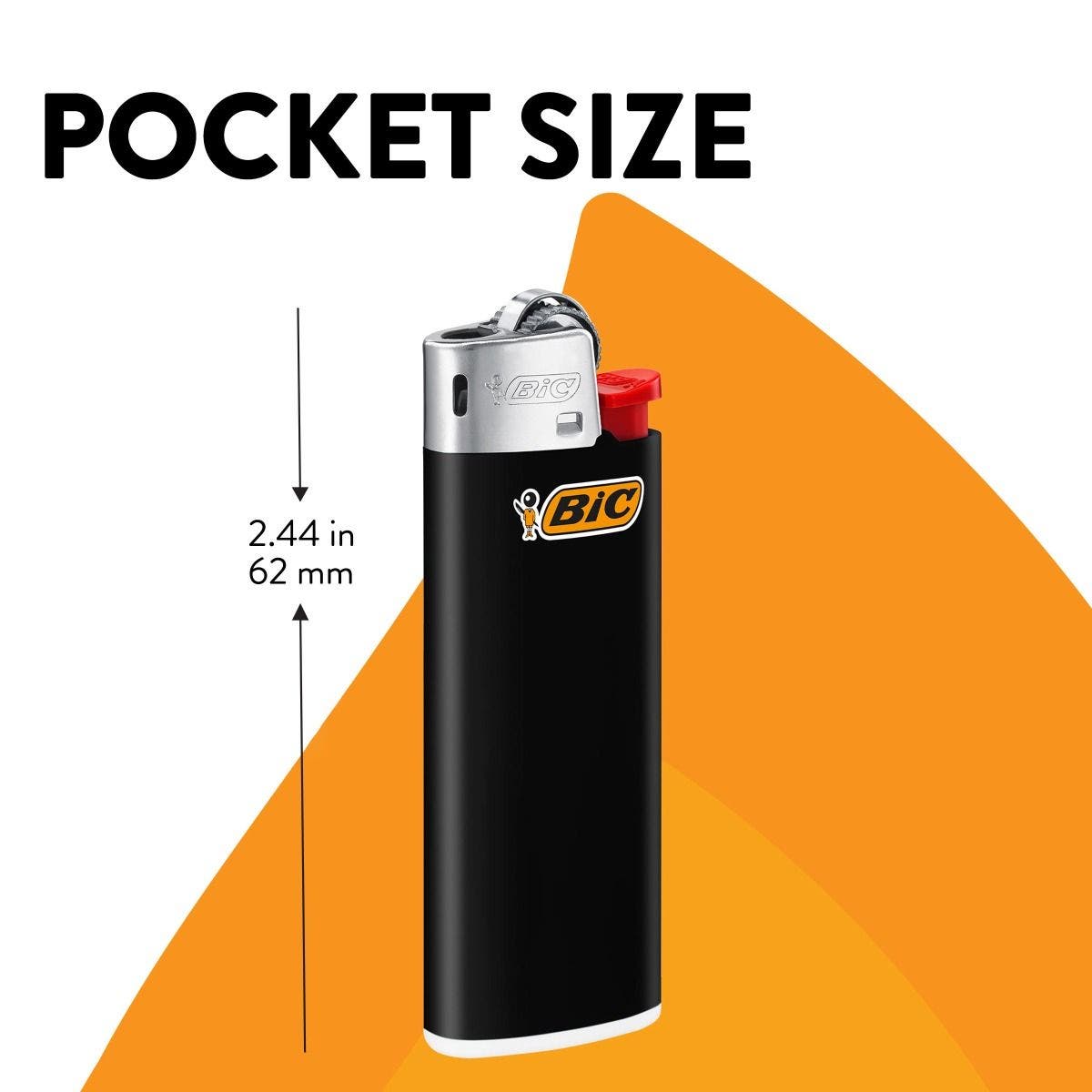
Overview
The BIC Mini has been the default fire-starting tool for backpackers since it launched in 1985, and for good reason: it weighs next to nothing, costs next to nothing, and works. It’s one of the most popular lighters used for long-distance hiking because of its small profile — 2 3/8” long and 7/8” wide — and impressive fuel longevity. If you’re looking for a lighter that gets out of your way and just works trip after trip, this is it.
Key Specs
| Spec | Value |
|---|---|
| Weight | 11.5 g (0.41 oz) |
| Dimensions | 7/8” W × 2 3/8” L × 1/2” D |
| Fuel Type | Butane |
| Estimated Lights | ~2,200 |
| Child-Resistant | Yes |
| Refillable | No |
Need to organize your gear?
Packstack is the free app that helps backpackers build a gear database, create detailed packing lists, and share their setup with friends.
Create Free AccountPerformance
Reliability
This is where the BIC Mini earns its reputation. Testing across five popular backpacking lighters confirmed what most backpackers already know: the BIC Mini is the best lighter for backpacking — ultralight, reliable, decently water-resistant, and a great bang for your buck. In one structured test, when struck 200 times, it lit a perfect 200. That kind of consistency is hard to argue with.
Fuel Longevity
The BIC Mini provides around 2,200 lights when used for quick stove ignitions (roughly 0.75-second flames). For campfire use — where you’re holding the flame for 3 seconds or more — that number drops to around 530 lights.
Either way,
a full BIC Mini could easily last a 5 to 6 month long hike with daily use.
Total available burn time works out to approximately 26 minutes at an average burn rate of about 0.0014 grams per second.
Water Resistance
The flint-wheel mechanism is the BIC Mini’s most weather-resilient feature. If the flint gets wet, it won’t light for a while — until it dries. Then it will work again. Even if you leave it in a pants pocket and run it through a washing machine, it will light after the flint dries out. In a controlled soak test, the BIC Mini is decently water-resistant — after submerging the lighter in water, shaking it out, and trying to light it in 1-minute intervals, it took an average of 2 minutes before it started lighting again consistently. That’s workable in a three-season emergency, though not ideal in sustained wet conditions.
Wind Resistance
Here’s the honest weak point: the Mini BIC’s only real downside is that it’s not wind-resistant. A simple windscreen can usually solve this problem, though. If you’re lighting a canister stove with a pot that has an integrated windscreen, you’ll rarely notice. Open-flame campfire lighting on a breezy ridge is a different story.
Cold Weather
Butane just doesn’t want to make a big flame when it’s cold. On cold hikes, you may need to walk with the lighter in your pocket to get the gas warm enough to produce a decent flame.
For sub-freezing use, keep it in a chest or hip-belt pocket against your body — a minute of warmth is usually enough to get it firing properly.
One noted benefit of the Mini-BIC is its ability to function in altitude change
, which is worth calling out compared to some piezo electronic alternatives that can get finicky at elevation.
The Child-Safety Band
This is a minor but recurring trail complaint. A common complaint is that the lighter can be hard to light — especially with wet hands. One workaround that many hikers swear by: removing the child-safety metal band that partially covers the flint wheel, which makes it much easier to operate. It’s a 10-second modification with a coin or fingernail, and most experienced backpackers do it before the lighter even hits their pack.
Accidental Discharge
One real gotcha: the button can be pressed accidentally in a ditty bag, draining the lighter’s fuel.
Worth keeping it in a pocket or small pouch with the thumb lever facing away from pressure points.
Pros & Cons
Pros
- Featherlight at 11.5 g — competitive with everything short of a ferro rod
-
Lightest, most affordable, most compact, and widely available option in tested comparisons
-
Very common for a single BIC Mini to last an entire 2,600+ mile hike with plenty of fuel to spare
-
Light, replaceable almost anywhere, and you can easily see how much fuel is left
by holding it up to a bright light - Flint mechanism recovers after getting wet; far more reliable than piezo electronic alternatives in damp conditions
- Costs under $2 and available at nearly every gas station, making mid-hike replacement trivially easy
Cons
- Not wind-resistant — any real breeze requires shielding the flame
- Butane fuel performance degrades noticeably in below-freezing temperatures
- Child-safety band is annoying with cold or wet fingers (though easily removed)
- Not refillable — disposable by design
- Accidental button depression in a pack can silently drain your fuel supply
Who Should Buy This
BIC lighters have been put through the ringer countless times by backpackers of all varieties — every year, plenty of AT and PCT thru-hikers complete their hikes having used only Mini BICs.
This lighter is for any 3-season backpacker who lights a canister or alcohol stove, needs an emergency campfire option, or just wants a reliable, zero-fuss ignition source that won’t eat into their weight budget. If you’re doing serious winter mountaineering or expect to be lighting fires in sustained high wind, step up to a torch-style lighter or carry stormproof matches as backup. For everyone else, this is the answer.
Verdict
The BIC Mini is one of those rare gear decisions that requires almost no deliberation. It’s not exciting, it’s not high-tech, and it doesn’t need to be. At 11.5 g and roughly $1.50, it’s the most weight- and cost-efficient ignition tool available for most backpacking use cases. The wind resistance limitation is real but easily managed, and the cold-weather performance dip is mitigated by keeping it warm against your body. I’d rate it 8.5/10 — the only thing keeping it from higher is the wind sensitivity and the fact that a soaked lighter means you’re waiting two minutes to cook dinner in a rainstorm, which is exactly the moment you least want to wait.